Home Blog Page 3

Best Time to Witness the Wildebeest Migration

0
Wildebeest Migration

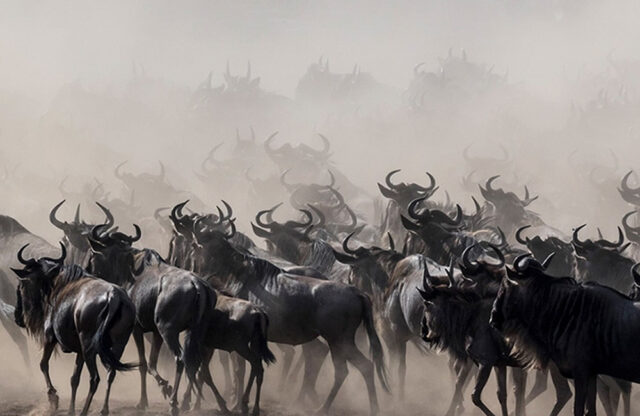
The Great Wildebeest Migration is one of nature’s most incredible spectacles, drawing thousands of travelers to Kenya and Tanzania each year. This awe-inspiring journey of over 1.5 million wildebeest, accompanied by zebras and gazelles, follows a cyclical pattern driven by rainfall and grazing conditions. Knowing when and where to visit is essential to witnessing key moments of the migration, from calving season to dramatic river crossings.

In this guide, we’ll break down the best times to visit, the top locations for migration viewing, and essential tips for planning the ultimate safari experience.

  1. Best Time to Witness the Migration by Season

The wildebeest migration follows an annual loop through Tanzania’s Serengeti National Park and Kenya’s Masai Mara. While it occurs year-round, certain periods offer more dramatic wildlife encounters.

December – March: Calving Season in Southern Serengeti

During this period, the herds gather in the southern Serengeti, particularly around the Ndutu region. This is the peak calving season, where thousands of wildebeest give birth daily. The lush green plains provide nourishment for mothers and newborns, but they also attract predators like lions, hyenas, and cheetahs. If you’re interested in predator-prey interactions and witnessing newborn wildebeest taking their first steps, this is the ideal time to visit.

April – June: The Journey North & Grumeti River Crossings

As the rains cease and the grasses in the southern plains dry out, the herds begin moving northward. By May and June, they reach the central and western Serengeti, where they must cross the crocodile-infested Grumeti River. This period is quieter than the peak season, offering incredible game-viewing opportunities without large tourist crowds.

July – October: The Iconic Mara River Crossings

By mid-year, the migration reaches the northern Serengeti and the Masai Mara in Kenya. This is when one of the most dramatic moments of the journey unfolds—the Mara River crossings. Thousands of wildebeest plunge into the raging waters, battling strong currents and hungry crocodiles. The crossings are unpredictable but typically occur between July and early October, making this the most popular time for safari-goers.

November – December: Returning South to the Serengeti

As the short rains arrive, the herds start moving back south toward the Serengeti, completing the migration cycle. This period offers excellent wildlife viewing with fewer tourists, making it an ideal time for those who prefer a quieter safari experience.

  1. Top Safari Destinations for the Migration

Depending on the time of year, different locations provide the best opportunities to witness the migration up close.

Serengeti National Park, Tanzania

The Serengeti is the heart of the migration, offering spectacular game viewing year-round. The southern plains are ideal for calving season, while the western and northern Serengeti provide thrilling river crossing encounters.

Masai Mara National Reserve, Kenya

From July to October, the Masai Mara is the best place to witness the famous Mara River crossings. This reserve boasts excellent wildlife densities, making it a must-visit destination for any migration-focused safari.

Grumeti Game Reserve, Tanzania

Located in the western corridor of the Serengeti, this private reserve offers an exclusive safari experience with fewer crowds. The Grumeti River crossings in June and July provide thrilling predator-prey action.

  1. Essential Tips for Planning Your Migration Safari

Choose the Right Time and Location

Decide which part of the migration you want to see and plan accordingly. The calving season, Grumeti River crossings, and Mara River crossings all offer unique experiences.

Book Early for Peak Season

If you’re visiting during the high season (July-October), book accommodations and safari tours months in advance. Lodges in the Serengeti and Masai Mara fill up quickly during the river crossings.

Opt for a Guided Safari

A knowledgeable safari guide enhances the experience by helping you track the herds, understand wildlife behavior, and navigate the vast landscapes.

Consider Different Safari Styles

Luxury lodges, tented camps, and mobile camps all offer different levels of comfort and immersion. Choose the option that best fits your budget and adventure style.

Experience the Greatest Wildlife Show on Earth

The wildebeest migration is a breathtaking display of nature’s raw power and beauty. Whether you choose to witness the birthing season in the Serengeti, the dramatic river crossings in the Masai Mara, or the quiet return of the herds to the south, timing your safari correctly ensures an unforgettable experience.

Planning a Gorilla Safari – 5 Things to Know

0
Gorilla Trekking

In a lifetime everyone has the right to encounter something out of the world, an experience that they will wish to take home with them, and just boastfully narrate to their relatives and friends in form of a deeply captivating story. Deciding to embark on a gorilla safari results in one of the few experiences that many people desire to have. The few who have experienced this still tell the same story but in different versions every day.

Yes for many, the climax of the trip to the gorillas is standing still and looking into the dark pensive eyes of the mountain gorillas is such a magical experience that will never fade off your memory! some travelers try to take a “selfie” with the mountain gorillas in the background, and share it with jealous friends. At that point, all your preparations have held truth; and all the nights of anxiety are no more.

But what are those little things that might make the entire safari even more gratifying? Here is my short list;

  1. Make sure you travel at the right time of the year. If you are not so sure about your fitness levels, I advise travelling during the dry season when the soils aren’t boggy. The best months of the year to track the gorillas would be December to late February and from June to September during the dry season.
  2. Remember to book your permit in time, preferably before you set off. Due to the high demand, about 180 people travel to Bwindi Impenetrable National Park daily for the Uganda Gorilla Safari experience, while others are placed on hold. You surely don’t want to be among the miserable lot that has to wait.
  3. All Uganda’s gorilla tracking trailheads are traversed on foot, with some hikes lasting 8 hours. As humans are playful, the gorillas might decide to play hide and seek so hikers should check that they are basically fit to climb through the jungle even for long duration like these.
  4. The rains are rarely predictable, so tourists should pack a pair of solid shoes, preferably jungle boots, a jacket and an umbrella. On a sunny day I would advise you to travel with a fine cap or hat, sun glasses (in case you find that you need them), smear yourself with sunburn lotion, and also come along with a good insect repellent.
  5. The other thing to mind about when planning your safari is choosing the right tour operator. The criterion for choosing the tour operator is somewhat crazy, but basically a company with a good customer reputation would be a good choice. With the right tour operator you won’t have to worry about sleeping uncomfortably, or arriving later than 8am when the gorilla trekking exercise has commenced. These are just a few things that will complement your holiday and make it more enjoyable. A hint to search for the specialty tour operators who may know better about the process of organising a gorilla safari, choices of lodges and campsites where to stay and how to craft tour itineraries.


Long Term Car Rental in East Africa

0
Car Rental in East Africa

Long-term car rental in East Africa offers a flexible and cost-effective solution for travelers, expatriates, researchers, and business professionals planning extended stays in the region. Whether you’re exploring the stunning landscapes of Kenya, Uganda, Tanzania, or Rwanda, having a reliable vehicle at your disposal enhances both convenience and mobility. Unlike short-term rentals, long-term options often come with discounted rates, customized packages, and added benefits like maintenance support. This guide provides essential insights into how long-term car rental in East Africa works, what to consider when choosing a rental provider, and how to make the most of your driving experience across borders.

East Africa represents Africa’s beauty with a wide number of untamed wildlife reserves that attracts many tourists all over the world. In Uganda and Rwanda, we find the only world’s last remaining population of the critically endangered mountain gorillas, inhabited in Volcanoes National Park (Rwanda), Bwindi Impenetrable Forest, and Mgahinga National park in Uganda.

Kenya and Tanzania are famous for the wildebeest migration that attracts thousands of Visitors into Masai Mara National Park in Kenya and Serengeti National Park in Tanzania. Book a very reliable rental car with Self-drive East Africa and explore all the hidden treasures of East Africa in a self-guided adventure. 

Countries in East Africa

Uganda is a relatively small country; it is a little destination that is often toured by road. With some sealed highways radiating from Kampala, the capital of Uganda to regional towns, there is a growing number of travelers who explore the country on self-drive adventures.

Kenya a country of great diversity, both physically and culturally, Kenya is one of Africa’s most popular destinations for very good reason. With blissful Indian Ocean beaches, craggy mountains, lush forests and wildlife-rich savannahs, there are endless beautiful places to visit in Kenya.

Tanzania from vast wilderness to lush green islands and from the Big 5 game to colorful corals, the East African country of Tanzania is known for its vivid wildlife, and rich aquatic life. Home to numerous islands, and monumental structures, the tropical town of Zanzibar also boasts of some of the most thrilling adventure sports, and alluring places to visit in Tanzania.

Rwanda is the smallest country in East Africa. Like its neighbor in the North Uganda, it’s also a land locked country and has no Sea port. It is bordered by countries like Uganda in the north, Burundi in the south, Tanzania in the east and DR Congo in the west.

Take on a road trip with a rental car for long term where you have free mileage and insurance. We keep our vehicles serviced making them roadworthy.  This is because they go off-road and longer distances. Go camping with a Rooftop tent on a 4×4 Land Cruiser on your road trip.

Long term rental days

The minimum number of days you need to qualify for a long term car hire in East Africa status is often 20 days and above.

Toyota Land cruiser cars for Long term car rental

Toyota Land Cruisers are the most common 4×4 for hire in Uganda, Kenya, Tanzania and Rwanda for Long Term Car rental at Budget/cheaper rates. If you are looking to hire your Toyota favorite for a safari, long term corporate job, Self-drive East Africa has a solution for you.  We hire out as many 4WD Toyota Land Cruisers including Extended land cruisers, Land cruiser LX, Land cruiser V8, respectively as required by you.

Hire a car with a driver/Guide

The best guided safaris are those where you design the itinerary by yourself and simply have someone drive you to all your desired locations. We have our own professional driver guides who come along with cars that are not offered for self-drive safaris.

Pickups and Drop offs

Pickups refer to the point from which your journey starts from. In some cases, it is the airport, hotel, car rental offices, or any other agreed place. For this reason, companies charge for pick up fees in areas outside their usual official pick up depending on the company policies.

Drop offs are the final destination in your journey. They also follow the same policies just like the pickups; in instances where you are dropping off the car in the company’s official drop off point, there are often no extra charges. However, whenever you drop the car outside the company’s officials drop offs, you will be charged a drop off fee dependent on the area of drop off. 

Benefits of long-term car rental in East Africa

  1. Zero Maintenance

If you were to drive your own vehicle into town, you’d be responsible for all insurance, maintenance, and documentation. But, when you choose a long-term rental vehicle, that responsibility lies with the rental car company. Furthermore, this means that you’re completely covered should you be in an accident or if the vehicle needs maintenance.

  1. Flexibility

Depending on the duration of your stay, you can return the car whenever you want. On the flip side, if you’re extending your trip, then the rental agreement can be extended to accommodate your plans. You can also change vehicles to accommodate your passengers. If you need something smaller, then stop by. If you need something larger, we’ve also got you covered.

  1. Discounted Rates

If you are running a project for 1 month to a year or more, then opting for a long term car rental option is the best choice to meet the success of your trip or project. Rwanda car rental prefer to make clients on long term rental very comfortable and are hence offered discounted rates compared to those on weekly and daily rentals. Discover that you can save a percentage on your rental price when you choose to opt for a long term car rental option.

  1. Comfort

Hiring a car for longer days allows you take your adventures at your own pace, no need to be dictated by bus and train times, waiting for the train or bus can be a hassle if your plan doesn’t go smoothly.  The car can become an overflow of your adventure and with it, always being close by you can store your bits and pieces inside. Renting a car also gives you that comfort to move around, you can dance along with the tune on the radio, talk to each other in a volume that you want or slouch and be as comfortable as you want.

  1. Meets Your Need

Long term car rentals allow you to make a vehicle choice depending on what specific needs you may have.  Whether you are going away as a family and a need a minibus or larger car, or need a van as part of your business operations through the summer months you can count on us (4×4@selfdriveeastafrica.com).

  1. Wide range of fleet selection

When you are to request for a long term rental, then you have the advantage of even selecting a preferred car option for your time of rental and you can as well to change the type of car in use to a different type with upgrade with same rate. Many clients send in and specify their particular car type and this is delivered to them since they will need it for quite a long term. We would not want to make a client uncomfortable with car types not asked for.

  1. Full Rental Management

With long term rental option, you have full car rental management from start to end of your rental period. Manage every movement of the car including driving time, distance, and mileage at your pace with no added money.

  1. Home, Hotel and Airport delivery service

Besides that, the home delivery service is available in specific downtown locations with long term rental. You can request the car to be delivered to your home, hotel, Airport address after the booking is made. Our advice for this would be to contact the car rental company beforehand to see if they have a home, hotel or airport delivery option.

Conclusion

To have unmatched experience make sure to start with Uganda, Rwanda, Tanzania and Kenya. You can choose one, two or combine three countries, since these nations share borders, a combined self-drive trip is more possible on a long term. A drive through East Africa exposes you to lots of adventure that will make your trip memorable when renting a car rental for longer days.

Gorilla Trekking in Uganda Vs Rwanda

0
Gorilla Trekking Trip

Many travelers who have made it for gorilla trekking can testify that gorilla trekking experience is one of the most delightful, lifetime adventures very one should include on a safari either to Uganda or Rwanda. No one can fully describe the joy and wonderful moment attached to the first setting eyes on the few remaining apes (gorillas) in their natural habitat.

I am one of the few gifted with a chance to rack the gorillas groups both in Uganda and Rwanda, but every day, it comes with a new experience which is incomparable. Each country charge differently but I have never regretted any of the trekking and I felt the cost of the permit is worth the value. Although the experience is much interesting, but it comes with some ups and down since it involves passing through the steep rocky hills in the forest and sometimes on a rainy day it comes muddy and the forest becomes tough to pass through.

However, when you meet these giants yet humble primate in their territory, it will be worth your effort and the difficulties you have passed through because history. The trek to meet the gorillas in unpredictable, however once the gorillas are met, you are strictly allowed to stay with for only one hour with these endangered great apes and get any details you have been wishing to know about them from the ranger guide as you study their behaviors. To be among the eight people per group to trek the gorillas, you have to own a gorilla tracking permit which is advised to be reserved in advance at least 2-3 months prior to gorilla trekking. You can book the gorilla permit yourself but chances of getting it your self is minimal since the tour operators are given the first priority of getting them, and its better you use a tour company to organize for you a gorilla safari packages.

By the time of writing, an approximate of 480 Mountain gorillas are living in the Virunga Masiff,  and they are shared by 3 African countries including Uganda, Rwanda, and Democratic Republic of Congo (DRC).

However, there are extra about 480 mountain gorillas in Bwindi National Park. If all combined, there are about 1000 mountain gorillas left in the world in the three countries of Uganda, Rwanda, and DR Congo. Mountain gorillas live in age-graded group’s families similar to those of humans and each gorilla group is led by a dominate silverback which is responsible for any activity taking place in the group, but only habituated groups are available for tourism (Rwanda has 12 habituated gorilla families and Uganda has 24 gorilla families which are ready to receive visitors very day). We will fully describe the habituated Gorilla groups in our coming articles.

If you want to pick between Uganda or Rwanda for gorilla trekking experience, here are some tip-offs, but remember flavor and favorite varies as an old saying “One man’s meat is another man’s poison”.

Cost of Gorilla Trekking   

The price for gorilla permit differs from each country, in Uganda the price for gorilla permit is US$800 per person per trekking while in Rwanda a gorilla permit costs US$1500 per trekking for one only one hour. While the by the time of writing gorilla habituation permit in Uganda and Rwanda is US$1500 per permit.

Gorilla habituation permit in Uganda takes up to a maximum of four tourists and in Rwanda it takes only one hour to track the gorilla family. Only 8 people are allowed to trek the gorillas per gorilla family. The money paid is a preservation fund to support the gorilla conservation and the communities around the gorilla habitat. In this case, If you are considering the gorilla trekking permit as a significant factor in picking a country to trek from, then you would consider Uganda because its gorilla permit is less, but if this is not the case, any country can work for you.

Gorilla Park Location from the nearest International Airport or City   

When considering the gorilla park distance from the capital/ airport, Rwanda generally provides the easiest access to gorilla trekking experience. However, this is so important when you are joining a gorilla trek with visiting other countries for example Kenya or Tanzania or more especially if you have inadequate time to spend in the country.

You can even trek the gorillas in Rwanda for only one day which is very impossible in Uganda.  Volcanoes National Park is situated just about 116 km from the capital city Kigali and it’s just a drive of about 2 or 3 hours to drive from Kigali to Volcanoes National Park. Meanwhile, Bwindi and Mgahinga Uganda gorilla parks are located 510 km from the capital city Kampala/ Entebbe Airport approximately 8 hours’ drive on a road.  In Uganda, you can only do 3 days gorilla tour 1 day for traveling to Bwindi or Mgahinga, day 2 is tracking date and day 3 is travelling back to Entebbe international airport).

Most tour companies in Uganda now give a gorilla package combined with other wildlife activities since there are several National Parks and game reserves along the way to Bwindi Forest and Mgahinga National park. Rwanda’s advantage is thatone can do the gorilla trek even in one day one can trek the gorillas and fly back to Kigali international airport. Also, note that it might be much easier to get space/tickets availability in Uganda than in Rwanda due to the fact that Uganda has many gorilla families than its counterpart of Rwanda.

Gorilla Trekking Experience Difficulty and Altitude Variations

Both in Uganda and Rwanda, Mountain gorilla trekking experience can be as short as 1 hour or as long as 4 hours dependent on where the gorillas spent their night from and on the gorilla family assigned to. But typically, gorilla trekking takes you about 2 hours hiking to see the gorillas in both countries. According to my gorilla trekking experience, trekking in Rwanda may be marginally easier than in Uganda, but this is not a guarantee that Rwanda has the easier gorilla families to trek, it has ever happened to trek a gorilla family in Rwanda for 6 hours and 30 minutes in Uganda.  As I mentioned already, gorillas are not human so they are unpredictable.  So there is no guarantee of ease in a particular country.

In terms of altitude variation, Rwanda, tracking takes place at 8000-10,000 feet above sea level, though in Uganda, tracking takes place at 4000-8,000 feet above sea level. So Visitors coming from a low altitude country must have to think of adjusting before tracking in Rwanda. Or track the Uganda groups.

Other Wildlife Activities other than Gorilla Trekking

If considering other wildlife activities to enjoy other than gorilla trekking, Uganda takes it all, the long drive to Bwindi or Mgahinga is quite charming with great backdrops all through like the Equator crossing for informative talks and photography, plentiful wildlife in Lake Mburo National Park, Queen Elizabeth National Park including the tree climbing lions, Kibale Forest National Park for primate trekking, terraced mountains with flowing rivers, and a lot of rural Africa and small towns. This can’t be mentioned on the Rwanda side when driving from Kigali to Volcanoes National Park.

On the other side, some sections of the roads to Bwindi Impenetrable Park are not so easy to drive to, yet in Rwanda it’s very easy on the smooth tarmac at least up to the Volcanoes National Park head office. Not to mention though, the roads leading from the Volcanoes park office to the gorilla trek trail-heads can only be accessed with a raised 4×4 vehicle.

Gorilla Tracking Experience or Better Gorillas

It’s always very difficult to know the gorillas in both countries Uganda and Rwanda. Uganda has 18 habituated gorilla families and 18 gorilla families and the mode and system of gorilla trekking in both countries is very similar. Gorillas are followed on a daily basis so that they become used to human beings so that they can be tracked safely in their natural habitat, therefore; the locations are effectively guaranteed. The gorilla tracking experience may diverge due to the following factors

  • Somebody may be interested in a particular gorilla behavior
  • Somebody may be interested in gorilla numbers, dynamics and group composition,
  • Someone may be interested in the length and toughness of tracking,
  • Somebody may be interested in the customer care given by the park staff.

However, with my long-time trekking experience in both countries, I have so far seen very little difference in the Gorilla Trekking Experience both in Uganda and Rwanda. All the gorillas in both countries are of the same species and have similar behaviors, group composition, and dynamics, some gorilla groups in Rwanda migrated from Uganda. All these characteristics may vary from group to group in a particular country. I have observed one critical difference, in Rwanda gorilla trekking begins early by 7:00 AM, with the visitors being entertained by the lively traditional dance troupe, coffee/tea dispensers with cups available for free to visitors at the park headquarters.  In Uganda, entertainments are done in the evening from the various traditional cultural groups including the batwa pygmy that are near the park and a small fee is charged to support the local communities.

General Cost involved in Gorilla Package:

When comparing the general costs involved, since bwindi/Mgahinga are located far away from Kampala there is a long drive involved hence rising the general cost. However, due to high demand, Uganda has removed the low season fee to compete satisfactorily in the market, by the time of writing the cost for gorilla permit US$800 per person per trekking. Rwanda increased its gorilla permits to USD 1500 per person per trekking. The costs involved are mainly transport, gorilla permit, and accommodation). The cost variation in the cost is therefore heavily reliant on the transport incomes you use, accommodation selected. All these can be chosen by either you or the tour company.

Other Tourism Packages in addition to Gorilla Trekking

If it happens that you only interested in gorilla trekking and nothing else like seeing other remarkable wildlife species, Rwanda is the best place to go. On other hand, if you are interested in combining both gorillas and wildlife species, Uganda is the best place to go. Uganda has 10 national parks and 12 game reserves which offers the best wildlife and game viewing experience and all these parks can be accessed in a few hours to two days. From Uganda’s capital Kampala to gorilla parks either in Mgahinga or Bwindi, you can branch to Lake Mburo National Park, Queen Elizabeth National park, Kibale Forest NP, Semuliki National Park among others. From here, you can view abundant wildlife species Uganda kob, as well as lion, leopard, elephant, giraffe, hippo and crocodile, several species of primates among other wildlife species. Not only that, Uganda is the best single country to visit for both chimpanzee and gorilla trekking. Many tourist after gorilla trekking in Rwanda crossover to Uganda to enjoy other wildlife species in Uganda’s national parks and reserve.

After all discussed above which Country are you Visiting Now?

From the base of our experience in tourism, the definitive decision to choose a country to trek the gorilla is reliant on a variety of factors ranging from someone’s budget and interest.

Mountain Gorilla Trekking in Uganda and Rwanda

0
Mountain Gorilla

The best recommendable species to go for tracking in Uganda And Rwanda are the mountain gorillas which are accompanied by chimpanzees. These endangered species can only be found in three destinations that is Bwindi and Mgahinga park in Uganda, Volcanoes in Rwanda and Virunga park in DR. Congo. It is very possible for you to see the endangered mountain gorillas in Rwanda and Uganda so long as you do possess a gorilla permit. There are other gorilla species which can be seen in other countries including the Democratic Republic of Congo though these are not mountain gorillas. They are called the low land gorillas. They are also found in Gabon in the Odzala – Kokoua National Park.

The major discrepancy between the low land and the mountain gorillas is that low land gorillas tend to be smaller and do have very brownish-gray coast and pronounced brow ridge, while the mountain gorillas of Uganda and the Republic of Rwanda are very large with quick black coats. They are the rarest primate in the world with a few population living in the wild. The number of the lowland gorillas outweigh the mountain gorillas

The Mountain Gorilla Permit of Uganda and Rwanda

The mountain gorilla permit of Rwanda increased to US$1500 per person, while that of Uganda is sold at US$800. When you are with this permit and with the mountain gorillas, it will take you almost an hour to spend with these gorillas. You are required to be in groups of 8 people. When you pay this money, you will contribute to the best preservation of these gorillas and as a thank you; you will get to spend about an hour with these mountain gorillas of Uganda and Rwanda. Approximately 80 people are allowed to trek gorillas in Rwanda and Uganda respectively and they get to see them in their natural habitat. As a client, every time you walk through the forest you will be leaving a foot print at least.

How easy can I access the mountain gorillas in Rwanda and Uganda?

For the land of a thousand hill, there is an easiest provision for gorilla tracking. This is because it provides the easiest access for gorilla trekking therefore, take this as part of your best option if you are coming for a gorilla tracking safari within these two countries. For the case of Uganda, the mountain gorillas are quite far as you will be required to move in the wilderness in search of these mountain gorillas. The town of Ruhengeri in Rwanda is considered as the jumping off point for the trekking experience in the Volcanoes National Park. It is only a few hours’ drive on excellent roads from the capital or her international airport- Kigali. Watching the gorillas of Uganda is more of a process and it involves an 8-10 hour drive from the international airport in Entebbe

Why gorilla trekking is considered difficult some times?

For you to see these mountain gorillas, it can necessitate you to move from 2-4 hours of hiking in order for you to find these endangered apes. In both countries that is Uganda and the Republic of Rwanda, it is usually a long day the hikes do vary and these depend on the location where the animals spent the night and which troop you are seeing. It has been concluded that the Rwanda experience is slightly easier while those in the Uganda are a little bit more strenuous though; there are no guarantees either way. The trekking experience takes place 8000-10, 0000 feet above the sea level and is not high enough for altitude sickness but just high enough to knock the breath. Thus, visitors who are spending some time in Rwanda might think very seriously about leaving their gorilla tracking until they have been in the country.

What things should you carry on your gorilla trekking experience.

Rain Jacket: you must carry a rain jacket with you because in these countries climate is unpredictable and due to the thick forests of Virunga and Bwindi, they influence the climate a lot. In this i mean it can rain at anytime.

Waterproof bag: You will need a good waterproof day pack in which you can pack the things you will be bringing along.

Good Hiking Boots: You need waterproofed hiking boots since you will have to hike though the thick forest for the gorillas which do hide in the mountains. These will help you from thorns to injure you body and they are good in slippery areas.

Long Trousers – they can be jeans – khaki zip-up trousers – but they have to be long-sleeved. A long-sleeved shirt is also necessary. Both protect you against nettles, branches, thorns and anything else that can scratch you.

The Best Wine in the Seychelles

0

This is not your ordinary kind of wine. So if you’re visiting the Seychelles islands, having a taste of their traditional drink if a must! Palm wine is made and drunk in various countries across the world. It is an alcoholic drink made from the sap of different palm trees. In Seychelles it is known locally as ‘calou‘, ‘kalou‘, or ‘toddy‘.

Look up into the palm trees here and you might see a bottle hanging down. It’s almost certainly not there by mistake, most likely its being used for palm wine.

The bottles used are generally not at all fancy, just a plastic bottle of any kind is what you’ll usually see.

In Seychelles, two parts of the tree are used to make calou – either the top of the tree in what is known as the spathe, or in the roots which supposedly makes a stronger wine.

Drinking straight from the tree as was traditional, the wine is warm and sometimes quite hot. This definitely adds to the alcohol buzz. If you chill it in the fridge for a little while its a lot more drinkable and it’s best to drink it within a day or two.

Where to drink palm wine

Palm wine is not something you’re going to find in any restaurants, but you can go to the Praslin Museum where they do demonstrations on how to tap palm wine. You’ll get a glass of it too if you are feeling brave enough to try it. You can also sometimes find it being sold in markets or food stalls.

Getaway Show Enthrals Visitors

0

The 23rd installation of the annual event blew people’s minds away and left them yearning for more. From an inaugural (exciting) pimp-your-bakkie-for-travel competition to spectacular game reserve attractions, the Getaway Show (sponsored by Dunlop, Getaway Travel and Airlink) had visitors smiling from ear to ear with sheer exuberance written all over their faces.

Held at The Ticketpro Dome in Northgate from 4-6 October 2019, the venue was packed to capacity with more than 100 exhibitors strutting their stuff including affordable travel packages, destinations, accommodation, outdoor gear, 4×4 products and accessories, motor homes, caravans, camping equipment and adventure operators. The event is a brand extension of the illustrious travel and tourism magazine, The Getaway.

The show has been giving travellers a taste of adventure, fun and experience in a lively atmosphere for the past 23 years. The event’s organiser and operations manager, Nasreen Abrahams said despite some challenges, the show ran smoothly this year.

One of the main attractions was an exhilarating competition in which visitors battled it out for a once-in-a-lifetime opportunity to have their car fitted with the modern top-of-the-range travel accessories. The extreme makeover, almost akin to the Pimp My Ride show, was to the tune of whopping R177 000.

The event also featured travel talks awareness, travel bag packing tips, showcasing game reserves as well as Indonesian cultural expeditions. “The event has improved in terms of activations and marketing. We’re planning on getting the youth into the show next year for contiki student tours. This is a big project that will be finalised for the upcoming show,” said Abrahams.

Among exhibitors was KwaZulu-Natal (KZN) Tourism, taking visitors and attendees on a breathtaking experience of bungee jumping through a 3D simulation! The simulation exercise also extended to riding the “waves” on the surfing board and cycling on some beautiful KZN mountain. “The experience was amazing! It felt like I was bungee jumping for real. I could feel them pulling me up by the rope after I was done,” remarked one of the visitors.

There was also a wide range of travel opportunities and ideas for everyone… from families to adventurers and aspirant globetrotters. For those seeking to travel the world, travel agencies were on hand to offer them advice and tips. Caravan and camping equipment was there for those who love to relax or have fun in nature. The show was also characterised by live music, fun family activities and a beer tent for folks who sought to quench their thirst.

One of the sponsors said they would definitely be coming back next year, and that their association with the show would remain intact for years to come. “From last year, we saw an opportunity to do sales – sell some tryes, activate an engagement to capture consumer details to build a database and ensure more brand awareness,” said Shailesh Signh, Dunlop’s Trade Marketing and Motorsports Manager. Alex Smith of Eco4x4Africa has been exhibiting at the vent for the past 10 years. “People only trust you when they see you and experience what you tell them,” said Smith.

The 2020 Getaway Show promises to be even bigger and better. Guess what? The next year’s show will feature new out-of-this-world attractions for the youth! Watch the space for more information.

Why Your Next Adventure Should Be a Train Trip on TAZARA

0
TAZARA Train

Looking for your next adventure? Central and Northern regions of Zambia have some of the best tourist sites in the country, from the national parks to the waterfalls. To see what the area has to offer, consider taking a train on the Tanzania-Zambia Railway Authority (TAZARA), which has operated between Zambia and Tanzania since 1975. It is among the most affordable ways to see Central and Northern Zambia.

It’s Affordable

A one-way, first-class ticket on a TAZARA express train from New Kapiri Mposhi station, Central Province, to Dar es Salaam, Tanzania, costs 333 Zambian Kwacha, approximately $34 USD. The cost of the ticket includes bedding, toiletries, and bottled mineral water. A second-class sleeper ticket is 272 Kwacha, which is approximately $28 USD, and a second-class seat is 252 Kwacha, about $26 USD. For a third-class seat, expect to pay 233 Kwacha, or approximately $24 USD. For the ordinary (non-express) train, tickets are about 15% cheaper.

Sleeper compartments accommodate four people and do not mix sexes, so it is advisable to book a whole compartment if traveling with men and women or as a family. Check the timetable on the website to plan your trip, but travelers should be aware that the trains from New Kapiri Mposhi station to Dar es Salaam often experience delays, sometimes for an entire day. Be sure to bring extra blankets, a change of clothes, extra tissue, wipes and enough food to last the journey (though food may be purchased onboard).

It Has Beautiful Scenery

Depending on the season, the view might include lush green bushes on the Zambia side. The Tanzania side offers opportunities to see wildlife, such as giraffes, zebras, elephants, and antelopes in the Selous Game Reserve. Other areas rich in wildlife along the route include Udzungwa Mountains National Park and the outskirts of the Mikumi National Park.

Great Stops Along the Way

TAZARA stops at such towns as Serenje, Mpika, and Kasama, which are filled with tourist sites, including waterfalls, national parks, and national heritage sites. Passengers must purchase a ticket for each stop. As the train doesn’t make frequent stops at each station, plan your stops in advance, or be sure to arrange alternate transport for your return.

The journey on Tazara

The town of Serenje is the 11th stop on the route from Kapiri Mposhi to Dar es Salaam. It is a great place to get off the train and explore.

Kasanka National Park
At Kasanka National Park, visitors might see a variety of animals, including hippos and various antelope species, such as the puku, waterbuck, sitatunga, and reedbuck. If traveling between October and December, spend a few days at the park and witness the annual bat migration. While here, make the journey to The Livingstone Memorial, where the heart of Scottish explorer Dr. David Livingstone was buried after his death in May 1873. International park fees are $8 USD per person per day.

Kundalila Falls

On the edge of the Muchinga Escarpment, the Kaombe River cascades over rocks, creating the Kundalila Falls. Visitors can enjoy swimming in its deep natural pool, which feeds into a botanical garden. The nearby forest offers a chance to see blue monkeys, and the views of the Luangwa Valley are beautiful. There is a nearby campsite with long-drop toilets and shower facilities, as well as a grill. Kundalila Falls is approximately 40 miles (64km) past the Serenje turnoff and about six miles (9.7km) past the turn for Kasanka. Then, it is approximately nine miles on a dirt track to the falls. Entrance is $15 USD per person, as is access to the campsite.

Nsalu Caves
The Nsalu Caves are approximately 40 miles (60km) north of Serenje. This area is believed to have been a settlement of the San tribe, but the most unique aspect of the caves is the rock paintings that differ from the stick figures and animals usually associated with the tribe. Here you’ll find abstract patterns, lines and outlines that, in some cases, are believed to be more than 100,000 years old. The entry fee is approximately $15 USD.

Shiwa Ng’andu
Overlooking the granite hills that form the tail end of the Great Rift Valley in Muchinga province is a manor house called Shiwa Ng’andu. English soldier Sir Stewart Gore-Browne built the manor, completing construction in 1932. Located between Mpika and Chinsali, tours are offered from 9-11am and cost $20 per person. Visitors should also stop by Kapishya hot springs, which are on the same estate.

Get to Meet People
Traveling by train for a few days is a great way to meet people, and TAZARA is no exception. With tourists and locals using this form of transport, there are many opportunities to make new friends.

The African Woman Who Inspired Pablo Picasso

0

You may not have heard of her, but she is one of Algeria’s most celebrated artists. Baya Mahieddine is famous for the iconic work that would inspire Picasso to paint a collection called Women of Algeria. As a self-taught artist, Baya retained the connection to ‘tribal’ art that so fascinated the Western world, and actively rejected any form of classification, instead drawing on personal memories and experiences.

Born in Algeria in 1931, Baya’s life was far from easy. Orphaned at the age of five, she was raised by her grandmother. Unable to attend school, she worked as a servant for a French woman named Marguerite Camina, who would later be described by the artist as her adoptive mother. Camina noticed the talent that her young servant displayed in making figures from clay, and encouraged her to develop her craft. Instead of following the typically Western models of art production that were being taught at the time, the young Baya drew on her own personal experiences and imaginings, alongside the traditional tribal art of Algeria.

Sharon Obuobi describes Algeria’s visual culture as boasting ‘intricately designed traditional textiles, ceramics, gardens, and architecture’, and these motifs reoccur in Mahyeddine’s paintings. Her clay figures are said to have inspired the fluid forms and figures she painted, giving her works their unique aesthetic that was so influential to artists like Picasso and Matisse.

By the time she was 16, Mahyeddine had her first exhibition in Paris. This is where her influence on artists such as Picasso is first noted. Picasso’s interest and fascination with African tribal art (and masks in particular) is well known. His graphic cubist style is attributed in part to his curiosity in traditional African forms of representation, at that time presented in Europe in the form of curios and artifacts rather than artworks. Mahyeddine was an exception to this. She was not creating tribal curiosities, but allowing her environment and imagination to shape her work.

Inspired by her spontaneity and natural talent, Picasso invited her to work with him in 1948. She was the elusive ‘untaught’ artist that gave Picasso fresh perspective. Picasso’s Women of Algeria series is said to be inspired by Mahyeddine, although it was painted after their time spent working together. Just as the young Mahyeddine’s influence on Picasso is evident, his influence is felt in many of her works. According to Sotheby’s ‘Picasso nurtured Baya’s aesthetic – particularly her use of color and line, while Baya’s cultural vitality served as creative lifeblood for Picasso’.

Like Picasso, Andre Breton was greatly inspired by Baya’s work. He found the bold colors and strange figures of her works revealed surrealist and dream-like qualities. He defined her work as Surrealism, and this view was widely held for a long time. Modernist critics used surrealist ideas of dream-like figures and the fascination with ‘naive’ art as a lens through which to view Mahyeddine’s work. This mindset is attributed to the problematic viewpoints at the time, which were ‘dominated by orientalism and the exoticisation of the world that Baya, the woman and artist, came from’.

But the artist refused to define herself using the terminology of the Western canon. She created work that was deeply personal, rooted in her childhood and her home. As Sana Makhoul asks in her research paper on the artist, ‘Why do we have to define and categorize artwork from non-Western cultures by imposing on them Western definitions and terminology?’

Baya married celebrated Andalusian composer Mahyeddine Mahfoudh in 1953. He’s credited with inspiring many of the instruments that appear in her works, as well as what many people see as the melodious and harmonious atmosphere that her works seems to evoke.

One year following her marriage to Mahfoudh, Baya stopped painting, only returning to her artistic practice in the late 1960s. The reasons for this break vary; some say it was to show solidarity with the revolution in Algeria, others that it was to raise her children. Whatever her reasons, the hiatus was temporary. From the 1960s on she continued to create works until the end of her life. Her rich, opulent paintings combine influences of traditional Algerian art, like ceramics and bold wall murals, with flowing figures and objects. Birds and animals combine with objects like instruments and fruit to create works that seem to be laden with symbolic meaning. Her pieces don’t follow any rules, continually denying the classifications forced onto them.

In the late 1990’s, nearing the end of her successful artistic career, Baya was amongst many Algerian artists that the French colonisers attempted to ascribe to French culture. Instead, she is credited for proclaiming her Algerian identity, evidenced by her refusal to leave the country during political instability, despite an invitation from France. Braving political and social instability, Baya could not bear to leave the home that had inspired her joyous paintings. She was an Algerian artist at heart – clearly the only personal and artistic classification she was happy with. She died in 1998, and remains a celebrated artistic figure around the world.

Uganda can Benefit from Growing Chinese Tourists Market into East Africa – Sandra Rwese

0

Located in Queen Elizabeth National Park, Kasenyi Safari Camp has a range of activities for its guests. In addition to the usual game drive and a trip to the Kazinga Channel, the lodge owners offer what they call a “bush breakfast”, a meal served in the wilderness with wild animals within hearing distance.

Great Lakes Safaris in the same game park, offers a hot air balloon safari. This is not just a new way to experience the parks, but also avenues to attract different crowds to Uganda’s tourism landscape. This has been one of the questions that Sandra Rwese, an expert in Chinese tourism, has tried to answer for many companies: How do you attract a different crowd? In her case, the Chinese tourist.

Uganda’s history as a former protectorate is spotted with many tales of safaris by governors and administrators taking a break to see the country, watch some wildlife and sometimes – in the case of the earlier explorers – even name a lake, river or mountain in honor of their people. Through the years, the primary target market for the country’s tourism industry has not changed much. There are therefore continually more visitors coming from the West than from the East.

Joseph Cui, a Chinese tour operative in Uganda, estimates that for the 69,000 tourists that arrived in neighboring Kenya in 2016, Uganda received only 100 in the same period. “There are many Chinese coming to Uganda, but they are not coming for tourism,” he says.

And yet, there is a lot more to see in Uganda than in the more popular neighboring tourist destination, Kenya. The country boasts the largest population of mountain gorillas in the world, up to 60% of the bird species found in Africa, chimpanzees, the Big Five, the source of the river Nile, breathtaking waterfalls and rapids, rare butterflies, hot springs and an incredible mix of flora and fauna.

Uganda has not done much to attract the Chinese tourist, though. “The tourism fraternity needs to understand even the simplest things like sending itineraries in four minutes (not four days), using prestige and social status to compose web content, or even hiring Chinese-speaking tour guides from Uganda,” Sandra says. She has spent most of her time since she returned to Uganda in 2014 helping businesses understand the digital marketing and cross-cultural nuances that will help them be more China-friendly.

Sandra stayed in mainland China and Hong Kong for almost two years. She speaks Mandarin and loves to travel throughout Asia. She is the Director of consulting company, Gulu and Hirst.

For the entertainment and tour operators she works with, Sandra helps them understand the Chinese market. “It is not built the same way as the West. These are not mzungus.” The tour agents in Uganda are accustomed to travelers from the West, can anticipate their needs and are able to (almost) market adequately to them. The Chinese market, however, they do not understand. And that lack of understanding – if figures are anything to show – is reflected on the consumer side as well. The Chinese tourist does not understand Uganda’s tourism industry either, and is therefore, unable to engage as well.

To effectively market Uganda, leisure and tour operators need to do more than offer a Mandarin translation of their websites; they need to also learn the different channels of communication for this target audience.
Following the censorship in China, many of the usual social media sites are banned. Facebook, Snapchat, Pinterest, Google are all unavailable and therefore an inefficient way to advertise to the Chinese tourist. In their place, the tour agent needs to invest in QQ, WeChat, Sina Weibo, and Baidu (the search engine) for digital advertising.

And yet, there is a lot more to see in Uganda than in the more popular neighbouring tourist destination, Kenya. The country boasts the largest population of mountain gorillas in the world, up to 60% of the bird species found in Africa, chimpanzees, the Big Five, the source of the river Nile, breathtaking waterfalls and rapids, rare butterflies, hot springs and an incredible mix of flora and fauna.

Once these are understood, the Chinese tourist is like low-hanging fruit. According to the Hurun Report, The Chinese Luxury Traveler 2016, there are fewer tourists to Japan, which was one of the favourable destinations and more Chinese are travelling further to the US, the Pacific Islands and Oceania, Africa and the Middle East. There is 179% more interest in Africa as a tour destination.

However, because the Chinese tourist has twice the money to spend and has been to all the usual places, multiple times – including some unusual places like the North and South poles – it becomes difficult to market to them.

“What luxury does Uganda have?” Sandra asks. There are few high-end hotels in Uganda and they are certainly not comparable to those in Paris, a favourite destination. In addition, Joseph Cui says, even the few places to stay will have issues like no running hot water, no power outlets for charging and no – or really terrible – wireless.
With such poor infrastructure, it is easy for this tourist to miss all the beauty and warmth of Uganda. And there is plenty of it.

Sandra emphasises the availability of adventure tourism in Uganda, often poorly marketed, that could be of much interest to this group. “We don’t have the five star hotels; but we have the five course white water rafting. We have horse riding, zip lining and bungee jumping on the Nile River,” she points out.

The idea is to attract a tourist who has already done the game drives in Kenya, Botswana and South Africa – multiple times. There are only so many times one will endure multiple-plane trips to see a lion. Even when the tourists have money to spend.

The two Chinese tourism experts, Joseph and Sandra, are however very optimistic and certain that they can let the people “find the place called Uganda.” But, we have to be very careful, they warn.

China has a population of over 1.3 billion. Naturally, a substantial number of these are unable to travel, but those who can are still too many for Uganda. “We cannot accommodate them,” Joseph says. And even if the country was able to – and it most certainly cannot – there is the question of managing them. “They have been engaged in all kinds of scandals, so you have to manage them,” Sandra advises.

In many of the countries they have visited, the Chinese have been involved in poaching scandals. In some African countries like Namibia, where an increase in rhino poaching has specifically been blamed on the increase in Chinese population in the country, the Chinese Government has had to commit to working with the African governments to curb the issue. Namibia has a population of about 100,000 Chinese.

But Uganda is yet to figure out how to let the Chinese know about “this place called Uganda” and for those who do know about it and are in-country for business, about the various tourist offerings around them. As more Chinese visit Kenya, can Uganda restrategise to benefit from the growing numbers of outbound tourists, specifically millennials in the 16–26 age group?